
What is Recovery?
“Recovery” is a buzzword in fitness marketing. It shows up everywhere, on products, classes, tools, and services, often without much clarity about what it actually means.
At New York Stretch, we take a more evidence-informed approach.
Recovery is not a single technique or modality. It’s not something you “do” once and check off a list. And it’s certainly not one-size-fits-all. In the research world, recovery is best understood as the process of restoring physiological and psychological balance after stress, whether that stress comes from training, work, travel, or life in general .
That distinction matters, especially when we talk about stretching.
Best Recovery Strategies
There is a growing body of high-quality research on recovery strategies overall. Across sports science, the most consistently supported recovery foundations are not flashy:
Adequate, consistent sleep
Sufficient energy intake and nutrition
Hydration
Appropriate training load management
These factors do more to support recovery than any single intervention layered on top .
When it comes to specific recovery modalities like stretching, massage, cold exposure, compression, the evidence is more nuanced. Large systematic reviews show that some methods can meaningfully reduce soreness and perceived fatigue, while others have smaller, context-dependent effects .
Stretching sits firmly in this nuanced category.
Stretching and Recovery: Where the Line Gets Blurry
Stretching is often assumed to be a recovery tool by default. But research does not support the idea that all stretching improves recovery or that it should be used interchangeably with relaxation or rest.
In fact, international consensus statements and reviews consistently show that aggressive stretching with the goal of increasing range of motion does not enhance post-exercise recovery when done immediately after training.
Why? Because recovery and flexibility training are not the same thing.
Stretching aimed at increasing flexibility often involves discomfort, long end-range holds, or techniques like PNF.
Recovery, by definition, should reduce stress on the system, not add to it.
Pain, high effort, or neurological demand may be appropriate in training blocks, but they can interfere with recovery if applied at the wrong time .
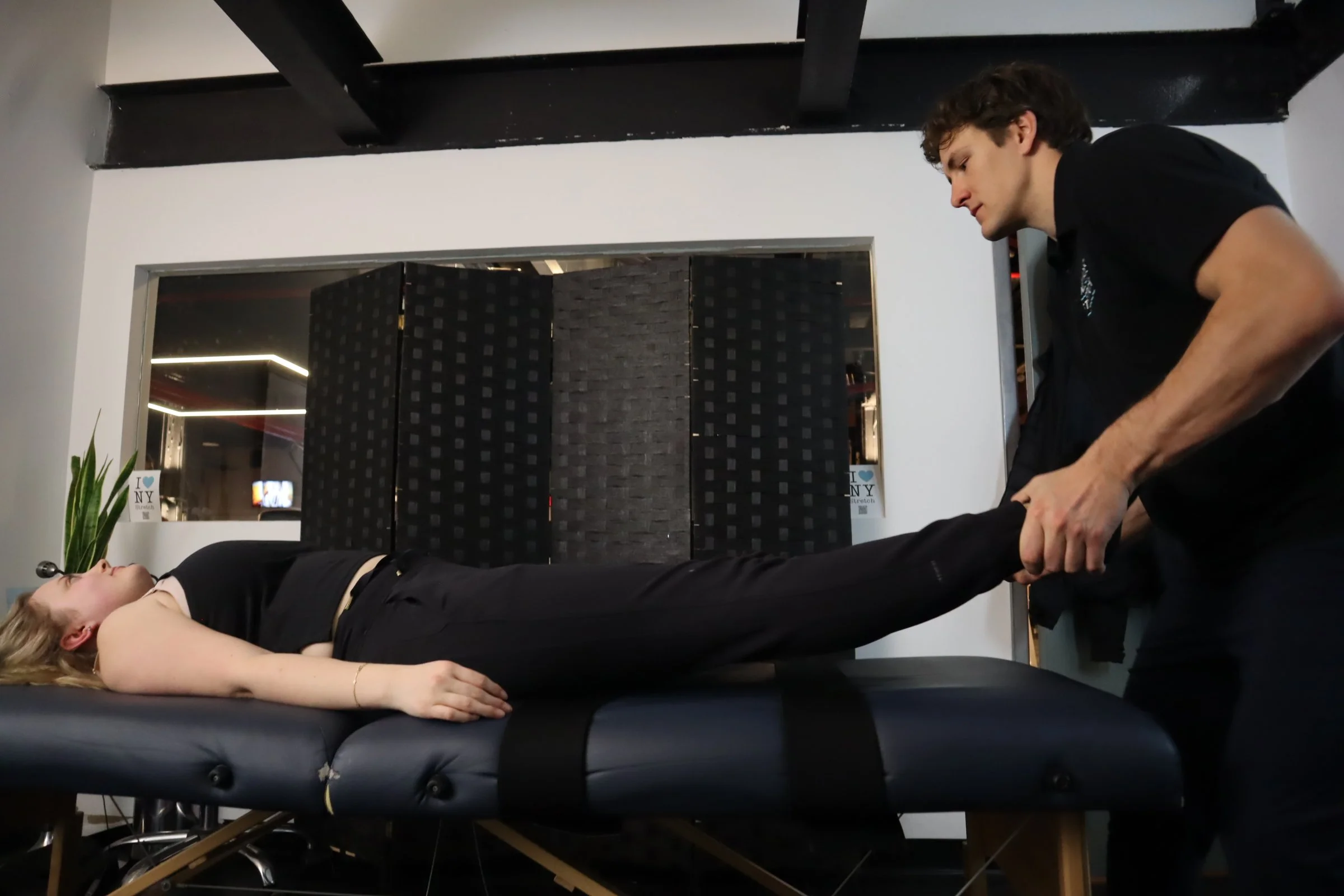
Assisted Stretching
There is currently not enough research on assisted stretching specifically to determine its role in athletic recovery. That’s not a flaw, it’s just where the research stands today.
Recent scoping reviews and evidence gap analyses make this clear: most stretching research focuses on short-term range of motion outcomes, often in warm-up settings, with far less attention paid to post-exercise recovery or nervous system effects .
So when assisted stretching is marketed as “essential for recovery,” that claim goes beyond what the research can currently support.
What we can say is this: context and intent matter.
When Stretching Does Support Recovery
Stretching is more likely to support recovery when it meets the following criteria:
Gentle intensity
Focused on existing range of motion, not pushing for new flexibility
Slow pacing with steady breathing
Low neurological demand
Designed to promote relaxation, not effort
Sessions like this are more likely to stimulate the parasympathetic nervous system, the branch responsible for rest, digestion, and restoration. Research comparing stretching to modalities like yoga suggests that when breathing, rhythm, and relaxation are emphasized, recovery-related markers such as heart rate variability improve more reliably .
In other words: it’s not just stretching that matters, it’s how you stretch that matters.
When Stretching Hinders Recovery
Stretching can work against recovery when it becomes another form of stress:
Long-duration end-range holds
High discomfort or pain
Aggressive PNF or contract-relax techniques
Sessions that feel effortful rather than calming
These approaches can increase neural fatigue and tissue stress, especially when layered onto already demanding training or busy schedules. Reviews on stretching and recovery consistently emphasize that recovery-oriented movement should be pain-free and restorative, not a test of tolerance .
Recovery is Personal
One of the most important takeaways from recovery research is that individual response matters. Two people can do the same session and experience completely different outcomes.
This is why recovery has become such a powerful marketing term. It promises certainty where none exists.
At New York Stretch, we don’t sell guarantees. We focus on:
Listening to how your body responds
Matching session intensity to your goals
Distinguishing between flexibility work and recovery work
Supporting recovery without overstimulating the system
Stretching can be part of recovery, but it really depends on how you stretch.
Our Perspective
Evidence-informed practice means holding two truths at once:
The research sets important boundaries.
Real bodies still matter.
Until the science on assisted stretching is clearer, the most responsible approach is a thoughtful one, using gentle, intentional sessions when recovery is the goal, and saving more intense stretching for times when adaptation, not restoration, is the priority.
No trends. No hype. Just informed decisions, made carefully, with your goals in mind.